
Stand With Those Who Cannot Stand Alone
When injustice occurs, the Legal Aid Society (LAS) provides free, end-to-end legal representation to individuals who cannot afford it. This means we support a case from signing the vakalatnama through hearings, trial, and final resolution, and through appeals where needed.
Donate to a Case
Your support enables survivors of violence, vulnerable families, and marginalized individuals to access:
Without this support, many individuals are left to navigate a complex legal system alone often resulting in delayed or denied justice. The average legal case takes 12-16 months, requiring sustained legal, financial, and emotional support throughout the process. Your contribution ensures that survivors are not forced to drop their cases due to cost or complexity.
Stories of Justice
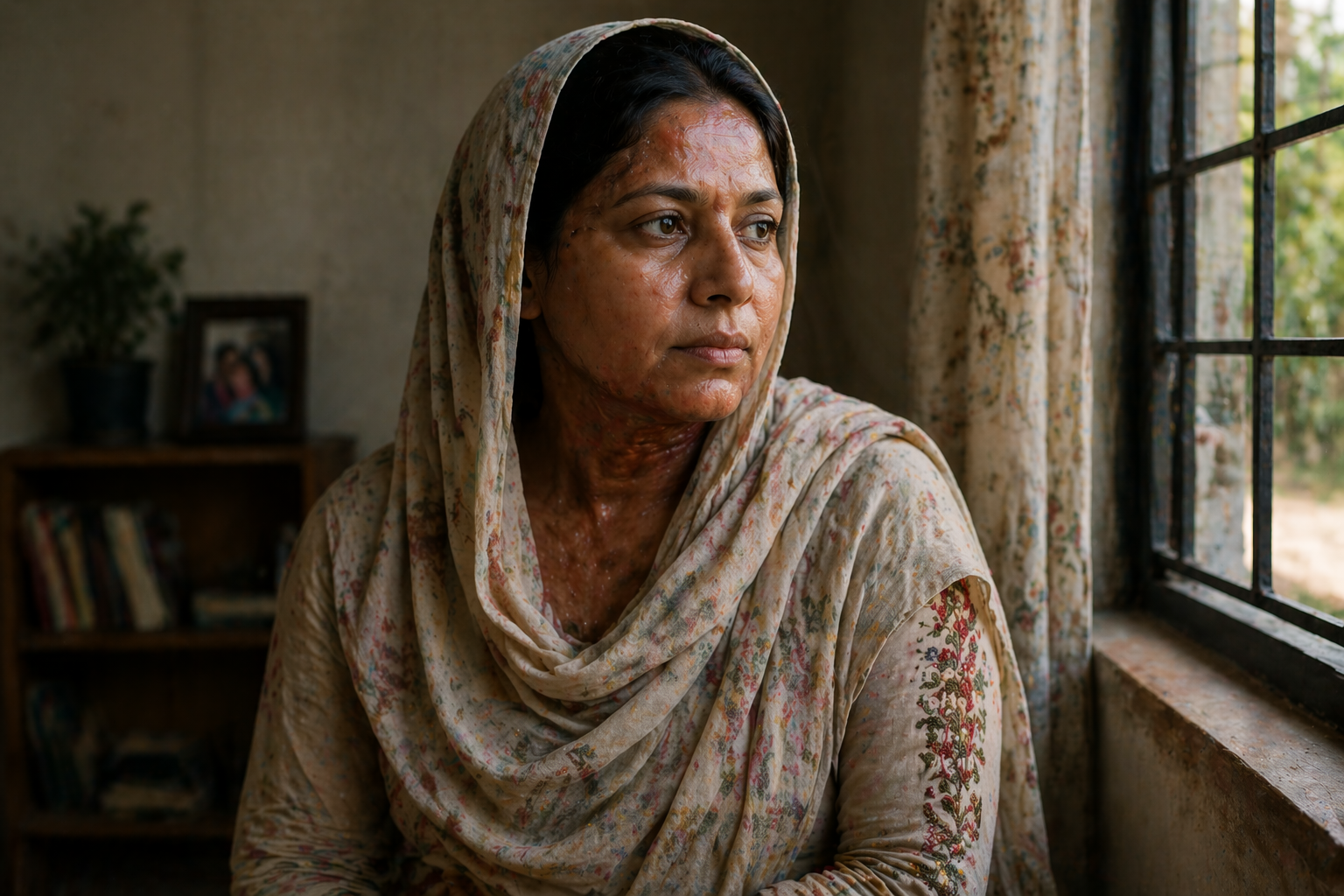
Nida's Fight for Safety and Custody
Nida left abuse to protect her daughters, but lost custody and faced intimidation. LAS acted quickly and helped reunite her family through urgent court relief.
Read Nida's Story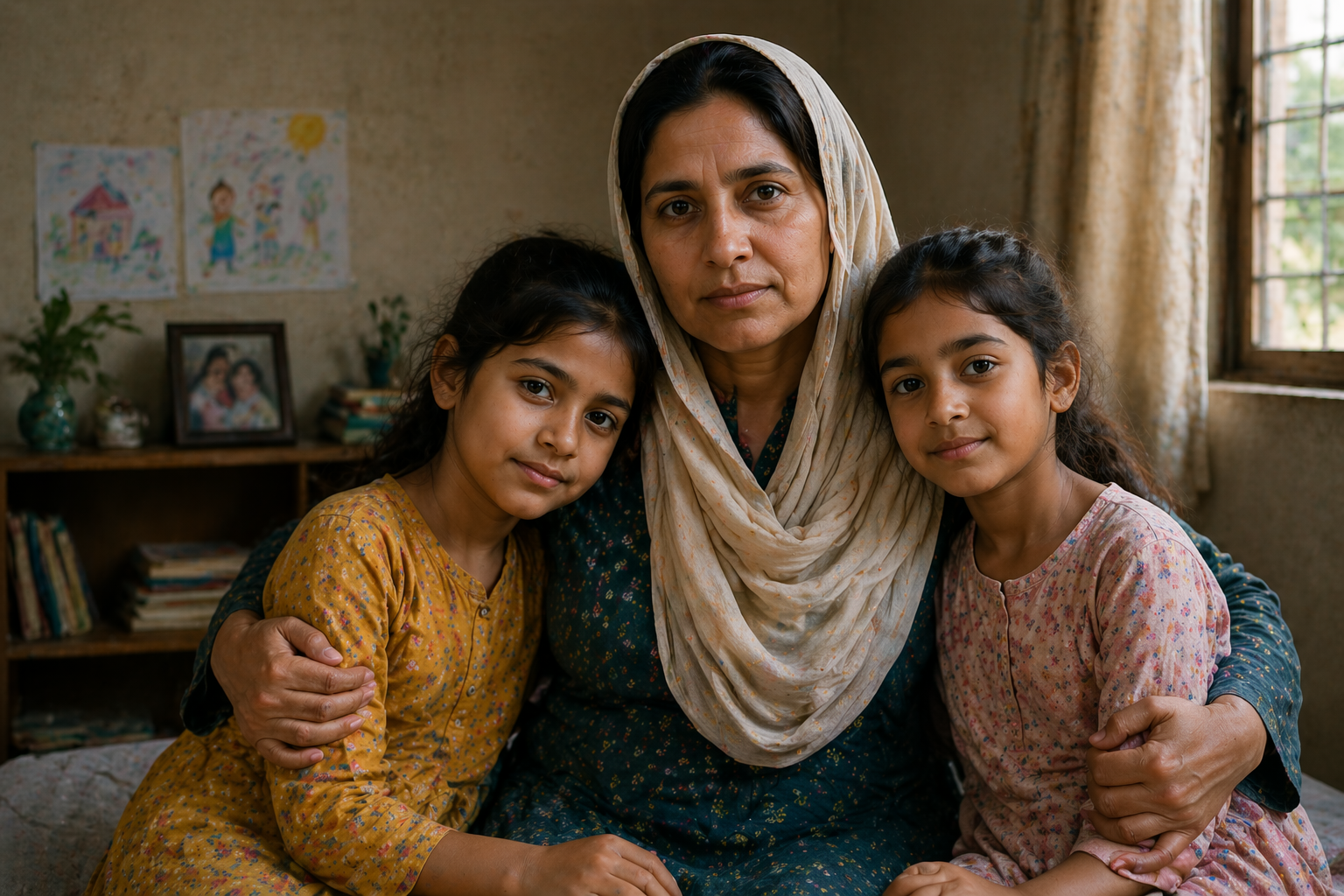
Ready to make a difference?
Every case supported means survivors are not left to face the justice system alone.
Donate to a CaseBringing the Law Closer to Communities
Many injustices occur not because the law does not exist but because people do not know their rights or how to access them. At the Legal Aid Society, our legal and financial literacy programs equip individuals with the knowledge and tools they need to protect themselves, make informed decisions, and seek help before a situation escalates into crisis.
Support a Session
Building empowered communities.
Creating a just society.
Our sessions are delivered across urban, peri-urban, and rural communities, ensuring that access to legal knowledge is not limited by geography. From interior Sindh to the outskirts of Karachi, LAS works in:
Our programs are designed for those who are most excluded from formal justice systems:
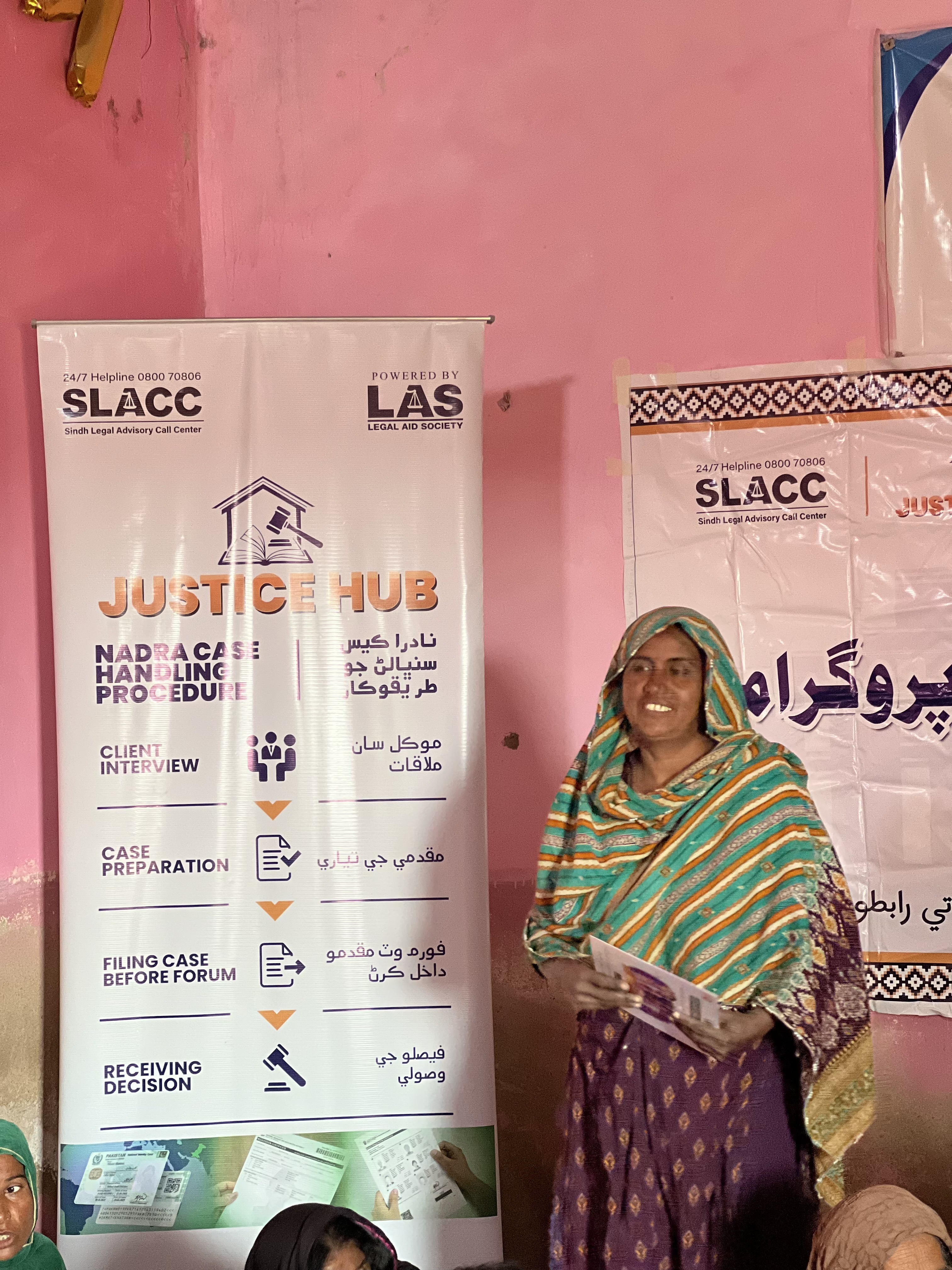
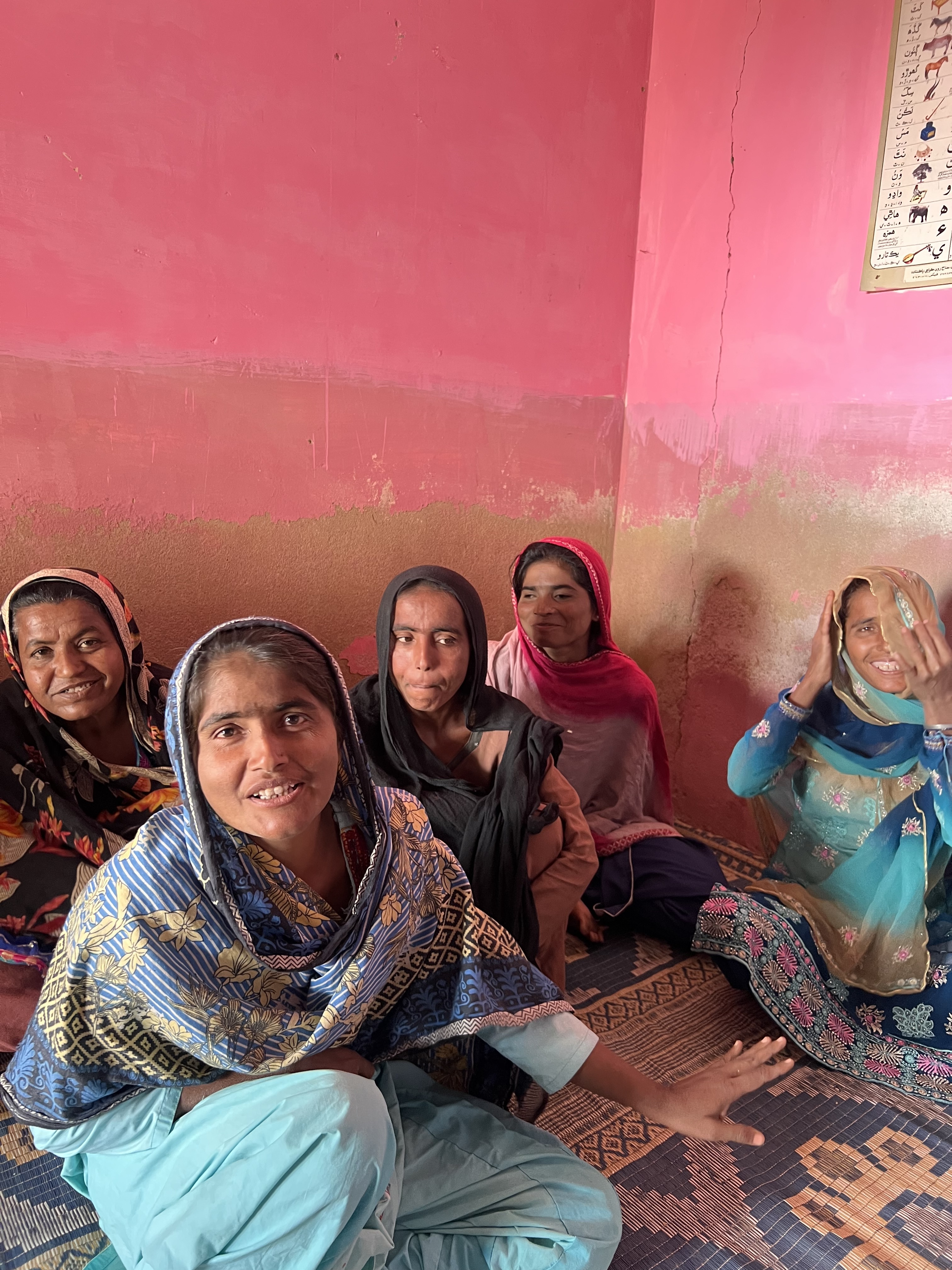
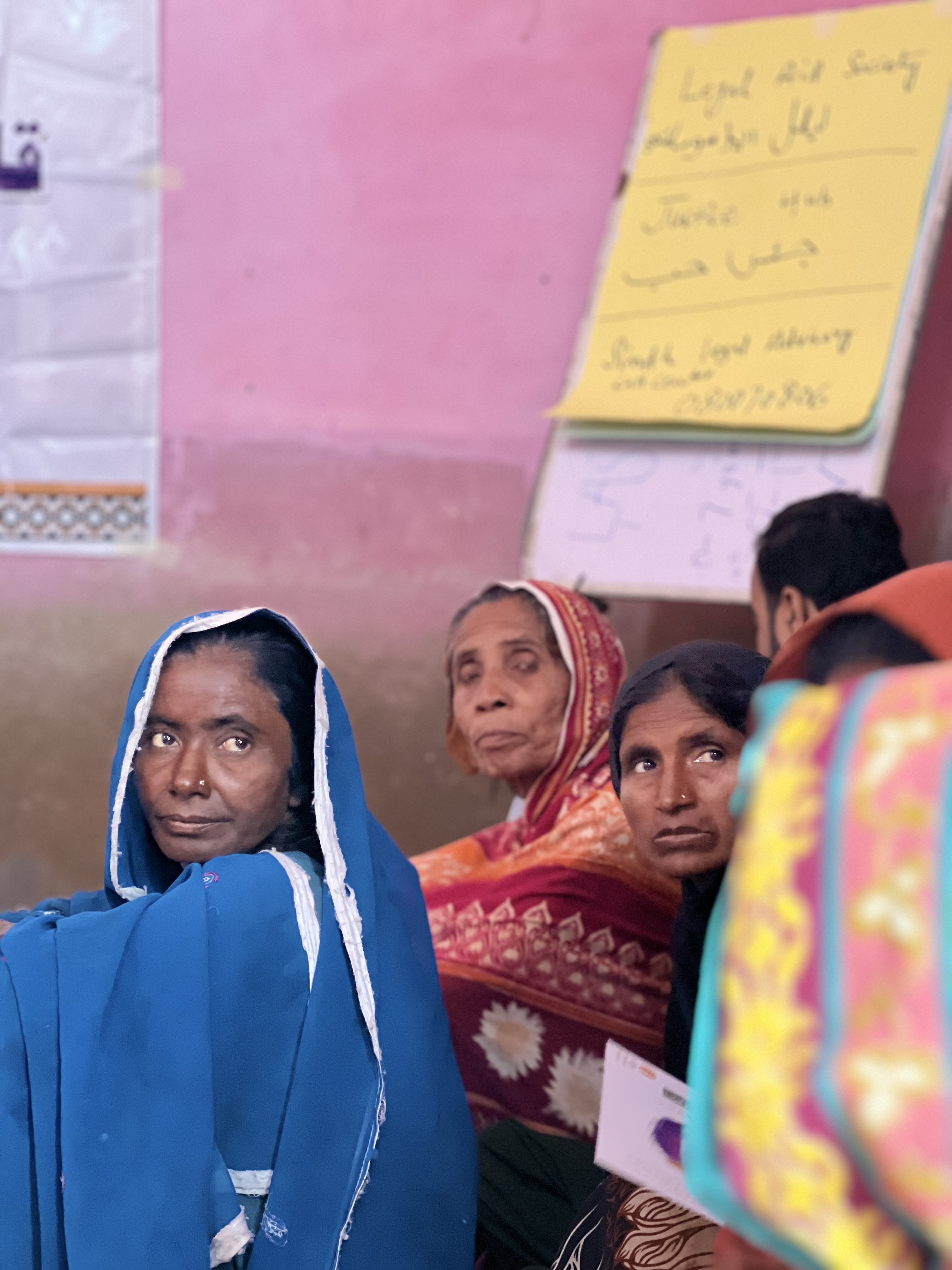
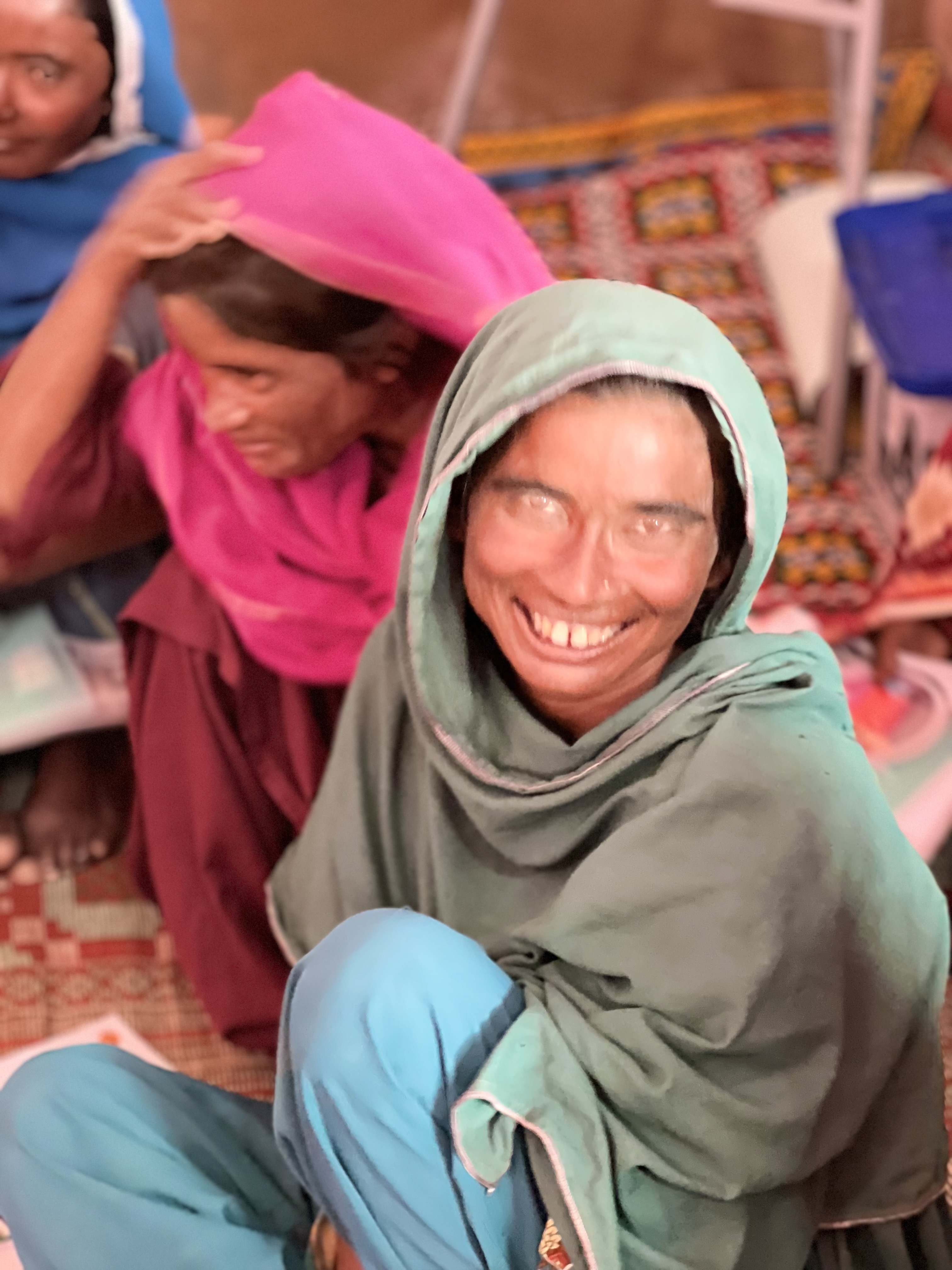
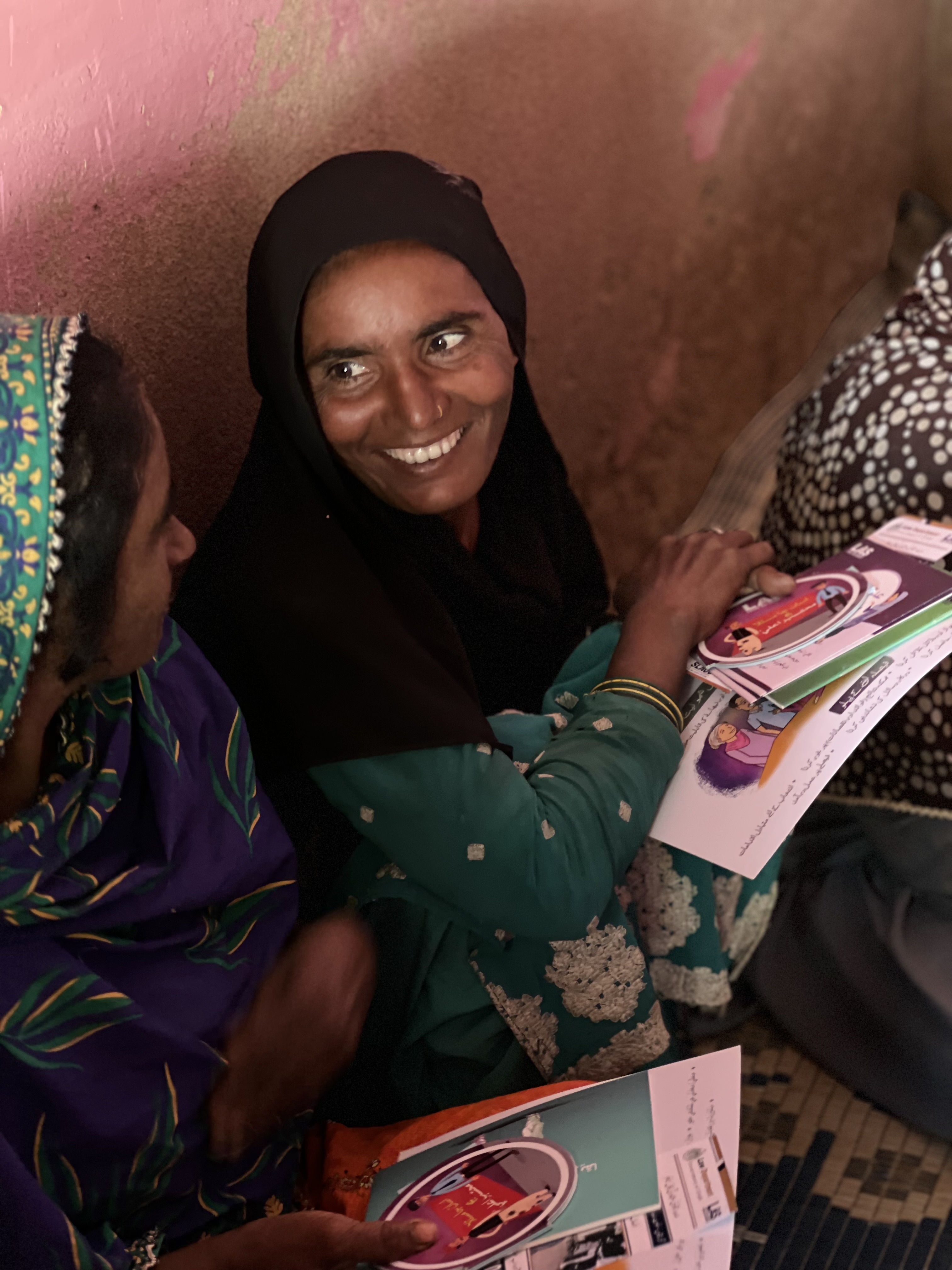
LAS conducts sessions through:
Legal and Financial Literacy Areas
Ready to make a difference?
Help fund one more legal and financial literacy session for underserved communities.
Support a SessionKnowledge is power. Access to justice is a right. Together, we can build communities where everyone knows their rights.
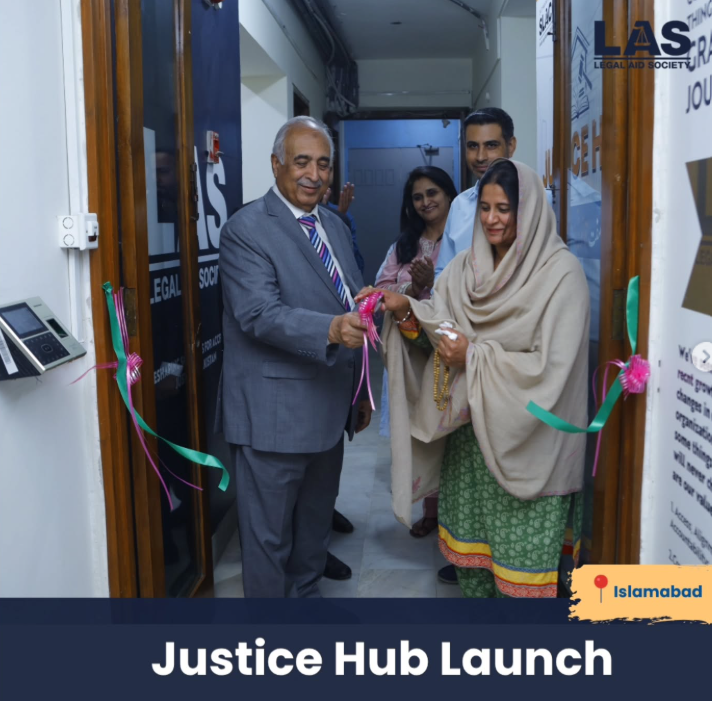
Justice Hubs: A One-Stop Solution Closer to Communities
Bringing Pakistan's justice system within reach of every community - regardless of income, geography, or knowledge.
Sponsor a Justice HubJustice exists. It simply isn't accessible.
For millions across Sindh and Pakistan, the challenge is not whether laws exist - it's whether they can be used. Legal institutions are physically distant, processes are opaque, awareness of rights is limited, and trust in formal systems is low. The result is not merely unresolved disputes - it is lost livelihoods, entrenched inequality, and justice becoming a privilege of the few.
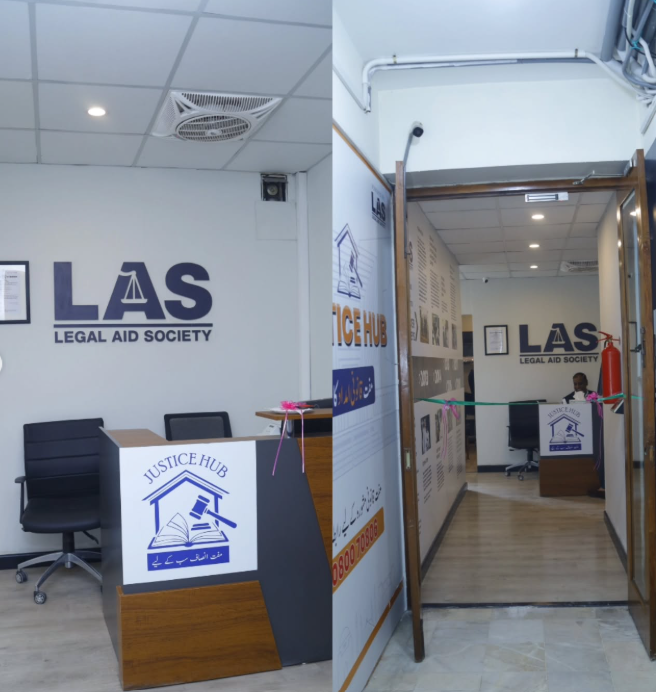
Justice Hubs: Safe, Accessible Support for Women, Children, and Vulnerable Communities.
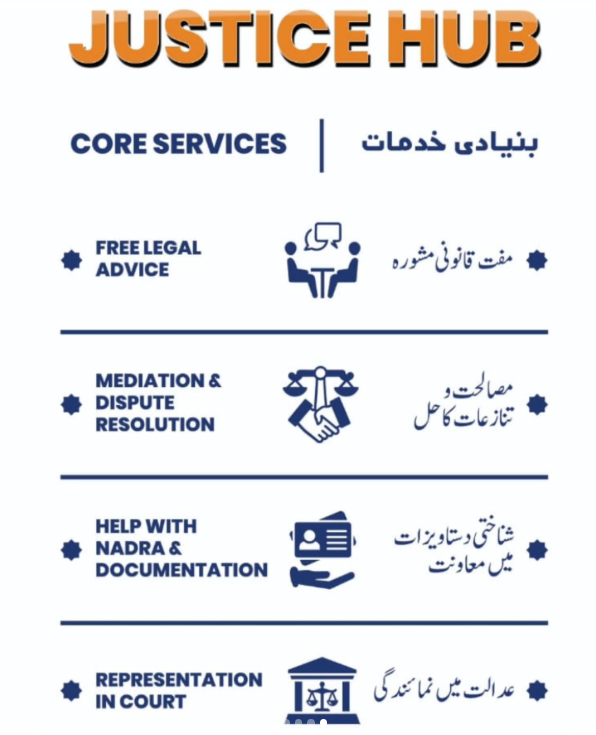
Each Justice Hub is located within or near underserved communities, run by lawyers, trained paralegals, and court-accredited mediators. All services are integrated under a single roof - prevention, response, and systemic reform.
Impact at Scale. Partnership with Purpose.
Proven track record since 2013 - a decade of impact across Sindh.
Fund a complete Justice Hub. Name it yours.
One Hub. One year. Complete justice infrastructure for communities can reach 13,000 beneficiaries at just $5 per person.
What One Hub Delivers in a Year
Aligned with SDG 16 · Peace, Justice & Strong Institutions | Gender Equality & Inclusion | ESG Responsible Business | Economic Participation.
A Pakistan where justice is not a privilege. Help us build it.
Partnerships: rd@las.org.pk | Website: www.las.org.pk
Support a Justice HubAn Instrument of Restorative Justice
Zakat is a redistributive obligation designed to correct structural imbalance in society. Justice systems require resources. When poverty prevents a person from accessing lawful representation or fulfilling court obligations, justice becomes inaccessible.
Give ZakatIslamic jurisprudence includes categories such as al-gharimeen (those burdened by debt) and those constrained due to financial incapacity. Zakat functions as a mechanism to remove economic barriers that block lawful rights. In this context, Zakat is not simply a relief. It is an instrument of restorative justice. It ensures that poverty does not determine who receives fairness under the law.
The Legal Aid Society is a Shariah-compliant, Zakat-eligible organization supervised by Alhamd Shariah Services. Your Zakat can provide legal aid to vulnerable individuals who cannot afford representation.
Zakat & Justice
Yes. While Zakat removes immediate financial barriers, LAS's work creates lasting social impact. When a vulnerable person secures lawful freedom or protection, the benefit extends to families and communities. Allah commands in Surah An-Nisa (4:135): "O you who believe, stand firmly for justice, as witnesses to Allah..." Justice in Islam is an obligation. Supporting access to justice ensures that rights are not limited by wealth. In this way, contributions toward legal protection and empowerment carry the spirit of Sadaqah-e-Jariyah - ongoing benefit through restored dignity and strengthened communities. Justice is a sustained impact.
LAS follows a structured compliance framework: (1) financial assessment of income, assets, and dependents, (2) review of legal documentation and case status, (3) Shariah eligibility screening, (4) internal approval prior to allocation, (5) separate accounting and tracking of Zakat funds, and (6) donor reporting with confidentiality safeguards.
Zakat is allocated to individuals who qualify as mustahiq under Islamic principles. This includes vulnerable individuals who: Lack financial means to pursue or defend their legal rights; Are burdened by court-imposed financial liabilities; Are survivors of abuse without access to legal representation; Face unlawful detention or structural injustice due to poverty. Zakat is applied directly toward the eligible individual's legal need. It is not used for operational overhead.
Yes, with structure and discipline. Zakat is a stable and recurring faith-based funding stream, but it must be ring-fenced, restricted to Shariah-eligible beneficiaries, audited, transparently reported, and kept separate from unrestricted operational funds used for institutional capacity and reform work.